

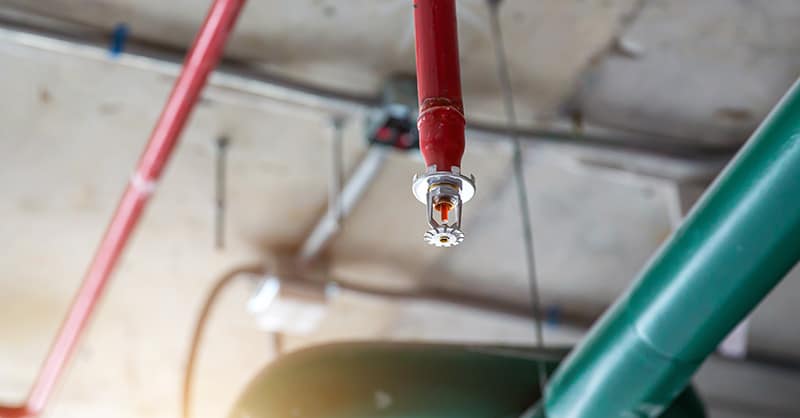
In the UK commercial property sector, fire safety is not merely a box-ticking exercise; it is a critical component of risk management, business continuity, and legal compliance. For property owners, facilities managers, and main contractors, the selection of a fire suppression partner is one of the most significant decisions in a building’s lifecycle.
Central to this selection process is the LPS 1048 certification. In 2026, as building regulations continue to tighten and the insurance market remains highly sensitive to fire-related losses, the demand for LPS 1048 approved fire sprinkler contractors has reached a critical peak. This guide provides an authoritative overview of the LPS 1048 scheme, why it remains the gold standard for UK insurers, and the best practices for commercial fire sprinkler installation.
What is LPS 1048?
The LPS 1048 (Loss Prevention Standard) is a comprehensive third-party certification scheme developed by the Loss Prevention Certification Board (LPCB), which is part of BRE (Building Research Establishment). It specifically governs the requirements for the approval of sprinkler system contractors in the UK and Ireland.
Unlike general trade memberships, LPS 1048 is a rigorous technical assessment. It ensures that a commercial fire sprinkler installation is designed, installed, commissioned, and maintained by a company with proven technical competency and a robust quality management system (typically ISO 9001).
The Four Levels of LPS 1048 Approval
The scheme is divided into four distinct levels, which dictate the complexity and scale of the projects a contractor is permitted to undertake:
-
Level 1: Approved for simple, single-end-fed systems (e.g., small retail units).
-
Level 2: Approved for slightly more complex systems, typically with a limited number of sprinkler heads and pre-calculated designs.
-
Level 3: Approved for the majority of standard commercial and industrial systems, including those requiring more advanced hydraulic calculations.
-
Level 4: The highest tier. Contractors at this level are approved for all types of sprinkler work, including high-hazard industrial risks and complex multi-storey commercial developments. They are also typically permitted to self-certify their work without direct LPCB supervision for every project.
By choosing an LPS 1048 fire sprinkler company at the appropriate level, specifiers ensure the contractor has the specific engineering expertise required for the building’s hazard classification.
Why Insurers Require LPS 1048 Approved Contractors
The UK insurance industry has a long-standing relationship with the LPCB. For many insurers, the presence of a sprinkler system is only considered a valid risk-mitigation factor if that system has been installed by an LPS 1048 approved contractor and carries a Certificate of Conformity.
Risk Mitigation and Due Diligence
Insurers view third-party certification as independent proof of “due diligence.” It provides an audit trail that the system has been designed to recognised standards, such as BS EN 12845 or the LPC Rules for Automatic Sprinkler Installations. Without this certification, an insurer has no guarantee that the system will function as intended during a fire event.
Premium Reductions and Coverage Terms
Many commercial policies include “Protective Communication” clauses. These require that fire protection systems are maintained and installed by approved specialists. Failure to use an LPS 1048 approved contractor can lead to:
-
Significantly higher insurance premiums.
-
Higher deductibles (excess) for fire-related claims.
-
The potential for a claim to be rejected entirely if the system is found to be non-compliant with LPC rules.
The Risks of Using Non-Approved Sprinkler Contractors
The temptation to use unaccredited contractors often stems from a desire to reduce capital expenditure on a project. However, the long-term risks far outweigh any initial savings.
Technical Failure
Fire sprinkler systems are complex hydraulic machines. Non-approved contractors may lack the specialized software or engineering knowledge to perform accurate hydraulic calculations. This can result in a system that lacks sufficient water pressure or flow to control a fire in a specific hazard area, leading to total property loss.
Regulatory and Legal Liability
Under the Regulatory Reform (Fire Safety) Order 2005 (and its subsequent updates), the “Responsible Person” for a building is legally obligated to ensure all fire safety equipment is fit for purpose. Using an unaccredited contractor makes it difficult to demonstrate that you have taken all “reasonable steps” to ensure safety. In the event of a fatality or major loss, this can lead to criminal prosecution, fines, and imprisonment.
Issues with Building Control
Building Control officers and Fire and Rescue Services (FRS) frequently request proof of competence during the handover of a new commercial development. A lack of LPS 1048 certification can delay the issuance of a Completion Certificate, preventing the building from being occupied or sold.
How to Verify an LPS 1048 Approved Company
Verification is a vital step in the procurement process. It is not enough for a contractor to claim they “work to LPS 1048 standards”; they must be actively certified and listed.
The Red Book Live
The most reliable way to verify a contractor is via Red Book Live, the LPCB’s official online directory.
-
Visit the Red Book Live website.
-
Search by “Company Name” or “Standard” (LPS 1048).
-
Check the Certificate Number and the Approval Level (1-4).
-
Ensure the certificate is current and hasn’t expired.
Requesting the Certificate of Conformity
For every project, an approved contractor should issue an LPS 1048 Certificate of Conformity upon completion. This document is unique to the installation and serves as the primary evidence for insurers and local authorities that the work meets the required standards.
Commercial Fire Sprinkler Installation Best Practice
A high-quality installation is the result of rigorous adherence to engineering standards and coordination between various trades.
1. Adherence to BS EN 12845 and LPC Rules
The primary standard for commercial systems in the UK is BS EN 12845, often supplemented by the LPC Rules (which include Technical Bulletins/TBs). Best practice involves:
-
Correct Hazard Classification: Ensuring the system is designed for the specific occupancy (e.g., OH1, OH2, HH) and storage configurations.
-
Water Supply Reliability: Utilising town mains, suction tanks, or gravity tanks that meet the duration requirements for the hazard class.
2. Integration with Passive Fire Protection
A sprinkler system is only one part of the fire safety strategy. Best practice requires that where sprinkler pipes penetrate fire-rated walls or floors, they are correctly fire-stopped using tested and approved materials. This maintains the “compartmentation” of the building.
3. Use of Approved Components
All components—heads, valves, pumps, and pipework—should be LPCB approved. Using non-approved components in a certified system can void the entire LPS 1048 Certificate of Conformity.
4. Coordinated Design (BIM)
In 2026, most major commercial projects utilise Building Information Modelling (BIM). LPS 1048 contractors should provide 3D models to ensure the sprinkler network does not clash with HVAC, electrical, or structural elements, which is essential for maintaining the hydraulic integrity of the design.
Frequently Asked Questions
Is LPS 1048 a legal requirement?
While not explicitly written into UK law, it is a “de facto” requirement for most commercial properties. Building Regulations (Approved Document B) and the Fire Safety Order strongly encourage the use of third-party certified contractors. Furthermore, most commercial insurance policies make it a condition of cover.
What is the difference between Level 3 and Level 4 approval?
Level 3 contractors can handle most commercial projects but may require LPCB supervision or design review for certain high-risk or complex works. Level 4 contractors have demonstrated the highest level of consistent quality and technical skill, allowing them to self-certify almost all categories of work within their scope.
Does LPS 1048 cover maintenance?
Yes. The scope of LPS 1048 includes the “servicing” of sprinkler systems. It is recommended that the company that installs the system also carries out the quarterly and annual maintenance to ensure continuity of the certification and system reliability.
Can a contractor at Level 1 install a system in a multi-storey office block?
No. A Level 1 contractor is limited to very basic systems. Installing a system in a multi-storey office would require a Level 3 or Level 4 contractor due to the hydraulic complexities of high-rise water supplies and the number of sprinkler heads involved.
Conclusion
The selection of LPS 1048 approved fire sprinkler contractors is a fundamental requirement for any UK commercial property project. By adhering to this standard, specifiers mitigate the risk of technical failure, ensure full insurance compliance, and meet their legal obligations under the Fire Safety Order.
In a landscape where fire safety standards are under constant scrutiny, the LPCB’s rigorous auditing process provides the peace of mind that a system will perform exactly as designed when it is needed most—saving lives and protecting assets.
Are you planning a new commercial development or upgrading an existing fire suppression system?
Contact our technical team today to discuss your requirements with an LPS 1048 Level 4 accredited specialist. We provide end-to-end design, installation, and maintenance services for complex commercial risks across the UK.
